Stop Buying More Software: Turn Your LMS Into a Strategic Growth Engine
This blog post explores how leaders at higher education institutions and organizations can use LMS features to achieve strategic goals. Read on for micro case studies that demonstrate how LMS tools like adaptive learning and native reporting improve operational scalability and enhance data-driven decision-making to drive success.
Every day brings a shiny new tech tool promising to solve your biggest headache, whether that’s scaling fast, closing feedback loops, or slashing administrative overhead.
Here’s the catch: complex operational challenges are rarely solved by adding more software to your stack.
Acquiring one-off point solutions might temporarily patch an isolated issue, but it creates a bigger problem: tech fatigue. Your executive team loses visibility, while your staff wastes hours juggling fragmented systems.
Instead of asking, “What new tool should we buy today?” shift the question to: “What strategic outcome are we trying to reach, and what is the shortest path there?”
When you lead with outcomes rather than tools, the answer often isn’t another expensive subscription. It’s right under your nose.
Your learning management system (LMS) is one of the most powerful—and heavily underutilized—foundational assets in your organization. An LMS can (and should!) do far more than just store and deliver courses. If you aren’t leveraging its full ecosystem, you’re leaving efficiency, revenue, and measurable institutional success on the table.
READ MORE | ‘Transition Without Tension: Why Migrating to Open LMS is a Strategic Upgrade’

How to Turn Hidden LMS Capabilities Into Measurable Institutional Success
As an organizational or higher education leader, you’ve likely faced the common hurdle of explicitly connecting your technology tools to your broader strategic outcomes. Such can be the case with learning platforms. It’s one thing to know that your LMS is capable of personalizing learner journeys, managing ecommerce sites, delivering unique training sites to multiple audiences with multi-tenancy, and more.
But how does knowing that these capabilities exist translate into achieving operational success?
The key is knowing how to translate your learning platform capabilities into standard industry concepts that help you identify and achieve measurable, real-world results. Consider the following to help you bridge the gap between technical features and business value.
Adaptive Learning
You can move beyond static courses—even when delivering standardized content like compliance training—to give your audience individualized experiences that maximize knowledge retention and optimize skill development.
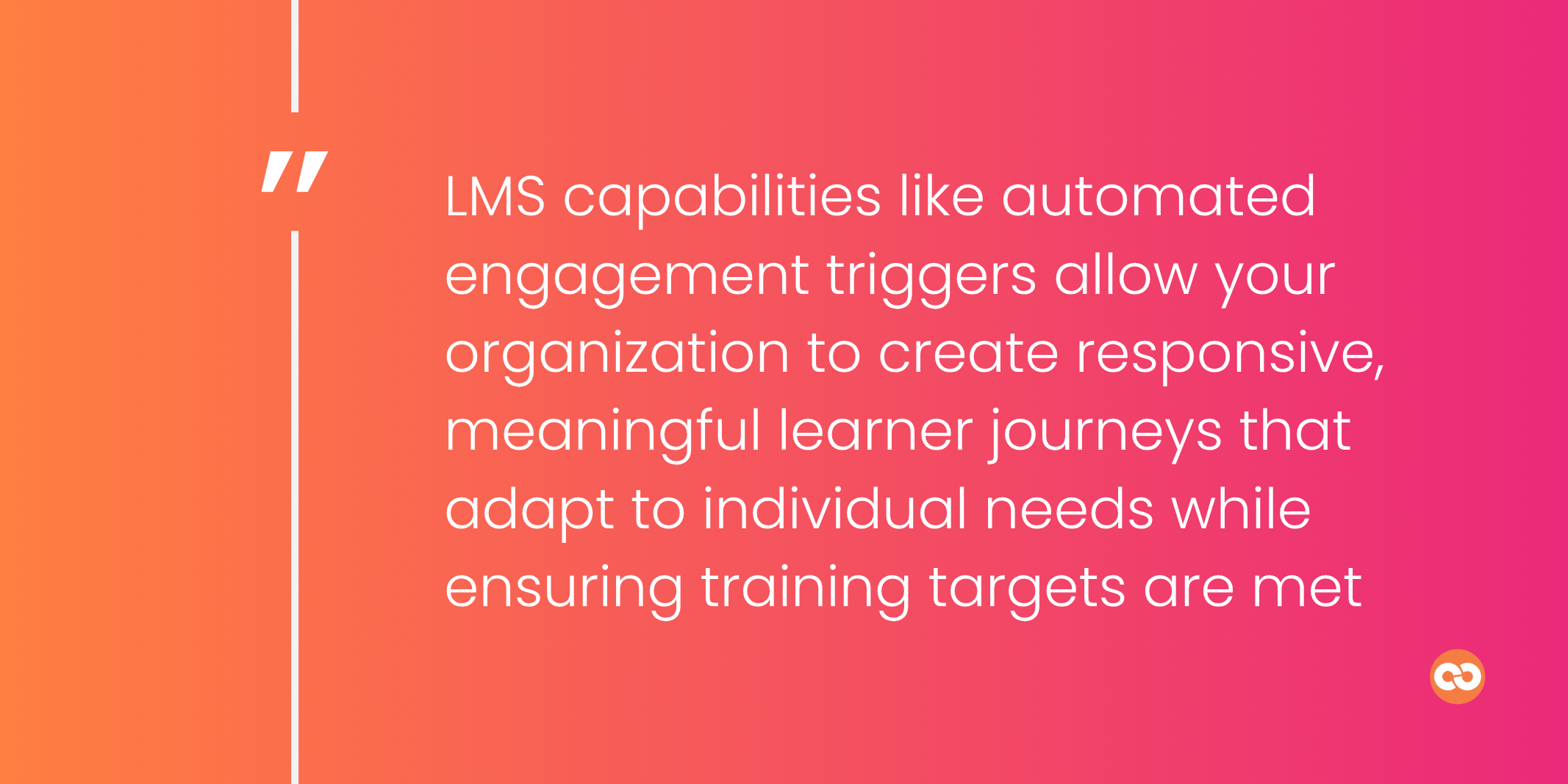
LMS capabilities such as automated engagement triggers allow your organization to create responsive, meaningful learner journeys that adapt to individual needs while ensuring training targets are met. Exclusive features like Open LMS’s Personalized Learning Designer (PLD) also improve learner engagement rates. Organizations and institutions have achieved 80% feedback response rates as a direct result of implementing PLD.
Operational Scalability
When processes are manual or fragmented, productivity suffers. With the right learning software solution, you can leverage multi-tenancy and centralized cloud hosting to transform fragmented, manual processes into streamlined, efficient systems. Doing so allows your team to focus on growth rather than infrastructure maintenance.
Data-Driven Decision Making
Like any great edtech tool, your LMS is full of information. Native reporting tools help you translate your raw LMS data into actionable insights that inform your strategic decisions. With reporting capabilities baked into your learning platform, you can swiftly move the conversation from “we track data” to “we use data to drive competency and business efficiency.”
READ A REPORTING CASE STUDY | ‘How Continence Health Australia Manages Its Critical Reporting Requirements With Open LMS’
Bottlenecks to Breakthroughs: How Real Leaders Optimize Their LMS
Your LMS can be optimized to help you solve an array of business and institutional challenges, from improving operational efficiency to reducing administrative friction and more. The following micro case studies are practical examples of how organizations are leveraging their learning and training software to achieve their business goals.
Retail Case Study: How Sodimac Turned a 1-Day LMS Migration Into 25% Growth
Sodimac, a multinational home improvement chain, faced an urgent need to migrate the Colombian arm of its Moodle™-based LMS. The organization partnered with Open LMS and completed its migration in just one day, ensuring zero downtime for its nine internal schools.
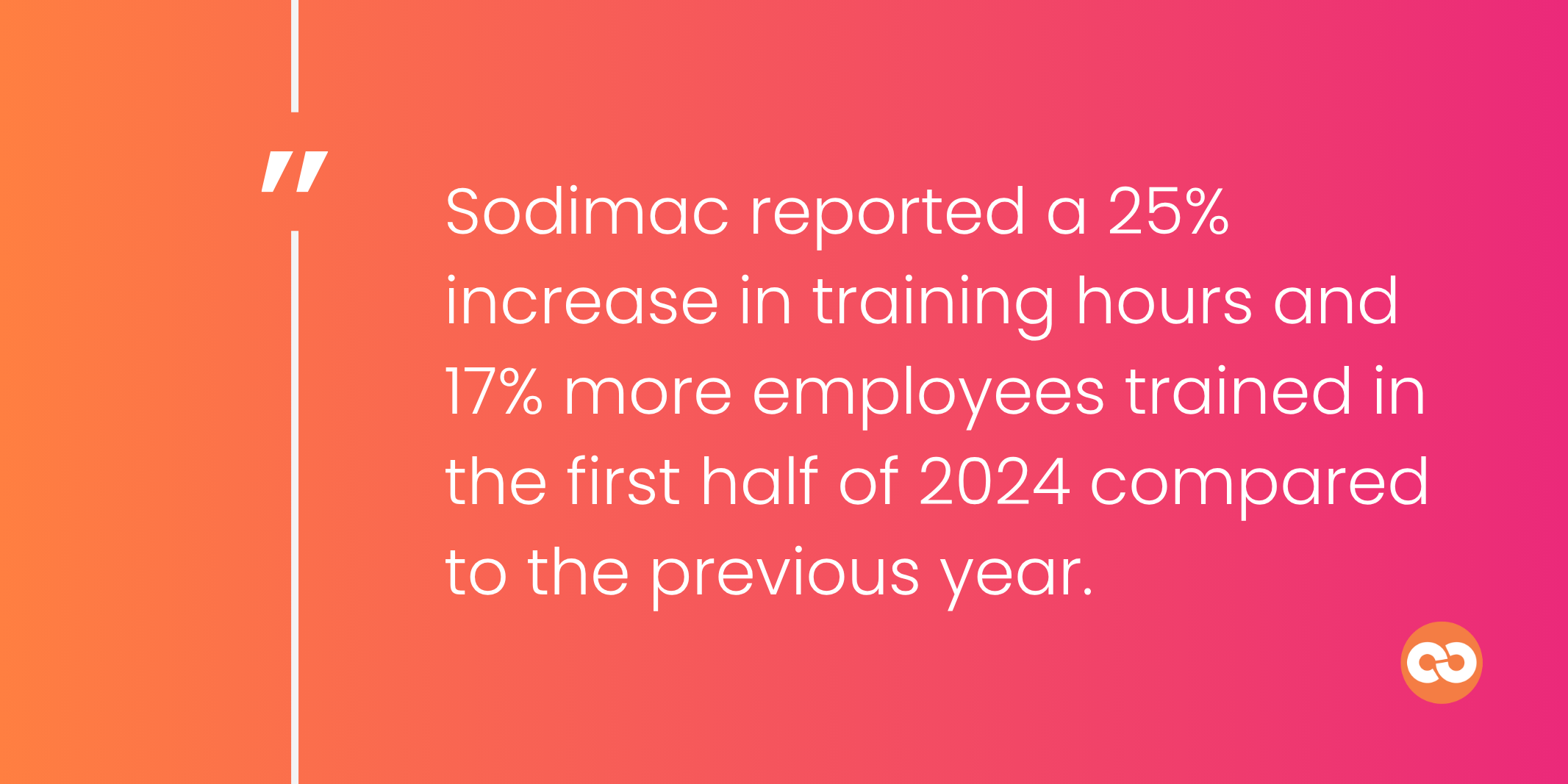
The migration also allowed Sodimac Colombia to centralize its LMS processes, enabling its team to simplify management for their leaders. Sodimac reported a 25% increase in training hours and 17% more employees trained in the first half of 2024 compared to the previous year.
Key Takeaway: Choosing a flexible, reliable, and high-performance tool allows organizations to turn an operational crisis into a catalyst for growth.
Higher Ed Case Study: How Trevisan Automated Student Enrollment in Minutes
Ensuring that technology enhances, rather than hinders, the learner experience is of paramount importance. Trevisan Business School in Brazil used its LMS to tackle such a challenge.
The institution needed a platform that could centralize content and modernize the user experience for its thousands of undergraduate and postgraduate students. Trevisan successfully integrated its LMS with its student registration and enterprise resource planning (ERP) systems. These integrations have streamlined the student enrollment process. When a student registers for courses, the integration automatically provisions their access to the LMS within minutes—no manual intervention required.
Trevisan also used its LMS to create segmented environments, allowing students to navigate multiple courses without confusion. This led to a modernized “digital face” for the institution and a significant leap in student satisfaction.
Key Takeaway: Integration and environment organization aren’t just IT tasks. They’re pedagogical necessities that improve engagement and clarity for students balancing busy lives.
HANDPICKED FOR YOU | ‘Optimize Your Education Budget: The Smart Shift to a Profitable LMS’
The Strategic Imperative
Leaders who view their LMS as a strategic tool (instead of merely a holding tank for learning content) consistently achieve superior operational efficiency and better learner outcomes. Whether you’re driving corporate training at scale or digitizing higher education, the right platform acts as the foundation for your organization’s future.
Ready to see how these strategies can be applied to your institution? Take a tour of Open LMS or request a demo today to see how we can help you put these industry-standard concepts into action.

Discover our solutions

